Affiliate Disclosure: We may earn a commission from qualifying purchases made through links on this page, at no extra cost to you. This helps us maintain our site and provide free content. Read our full affiliate disclosure.
French Press vs. AeroPress: Which One Is Right for You?
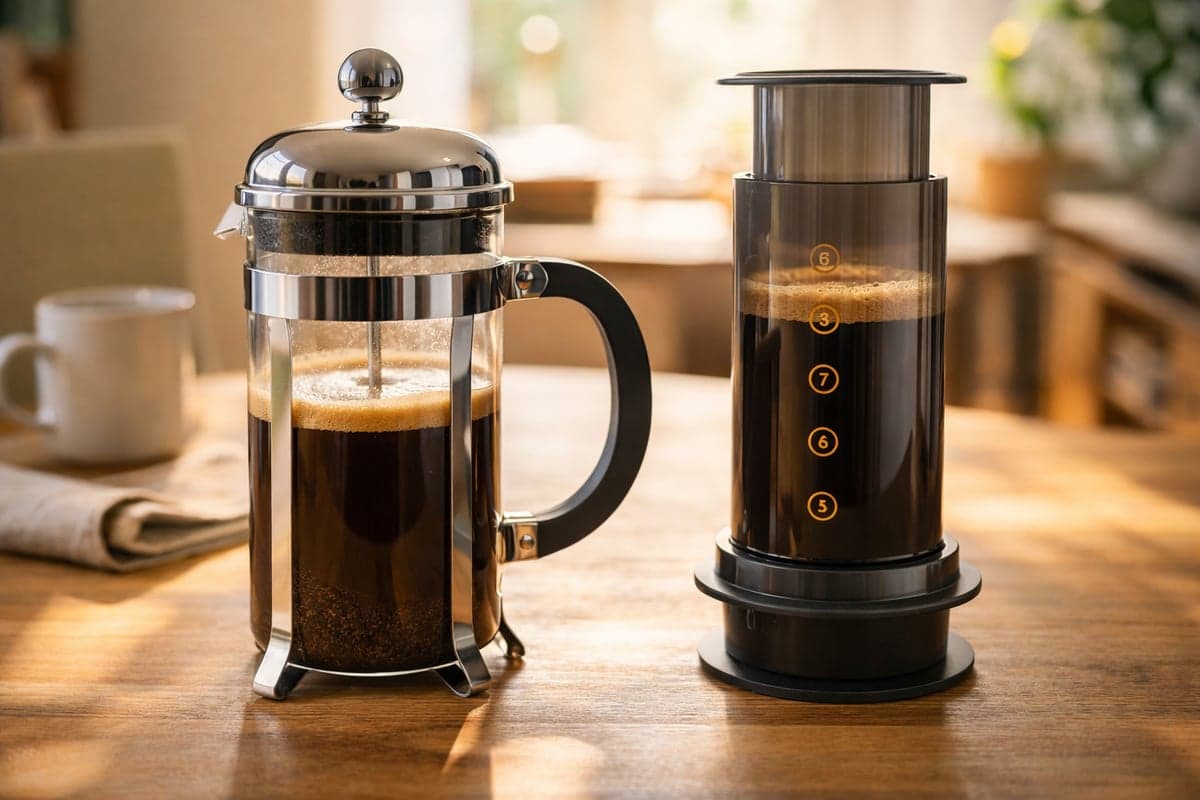
Two of the most popular immersion brewers go head-to-head. We compare flavor, ease of use, and cleanup.
How We Compare Products
We compare products based on objective criteria, specifications, and user feedback to help you make informed decisions.
Our Evaluation Criteria
Value & Price
We consider both budget-friendly and premium options, evaluating whether products offer good value for their price point.
Features & Specifications
We analyze product specifications, features, and capabilities to ensure they meet the needs of our target audience.
User Reviews & Feedback
We research user reviews, ratings, and feedback from multiple sources to understand real-world performance and reliability.
Build Quality & Durability
We evaluate materials, construction, and durability based on manufacturer information and user reports.
Brand Reputation
We consider brand reputation, customer service, and warranty support when making recommendations.
Use Case Fit
We match products to specific use cases and brewing methods to ensure our recommendations are relevant and practical.
Note: We do not accept payment or free products in exchange for positive reviews. Our recommendations are based solely on our evaluation criteria and research. For more details, see our About page and Affiliate Disclosure.
Both the French Press and the AeroPress are immersion brewers, meaning the coffee grounds sit in water for the duration of the brew. However, the results couldn't be more different. Understanding these differences will help you choose the right brewer for your coffee preferences and lifestyle.
Immersion brewing is one of the oldest and most forgiving coffee brewing methods. Unlike pour-over methods that require precise technique, immersion brewers allow coffee and water to steep together, making it easier to achieve consistent results. But the French Press and AeroPress take this concept in completely different directions.
If you're new to manual brewing, understanding how to choose coffee beans is crucial for getting the best results. And don't forget—both methods require a quality grinder. Our burr vs. blade grinder comparison explains why grind consistency matters.
Both methods work best with freshly ground beans, so if you're still using pre-ground coffee, consider investing in a quality grinder. Our burr vs. blade grinder comparison explains why grind consistency matters, and our top burr grinders under $200 will help you find the perfect match.
Understanding Immersion Brewing
Before comparing these two brewers, it's helpful to understand what immersion brewing means. In immersion brewing:
- Coffee grounds are fully submerged in water
- Extraction happens over time (typically 2-5 minutes)
- The grounds and water are separated after steeping
- This method is more forgiving than pour-over
The key difference between French Press and AeroPress is how they separate the coffee from the grounds, which dramatically affects the final cup.
French Press: The Classic Immersion Brewer
The French Press (also called a press pot or cafetière) has been a coffee staple since the 1920s. It's beloved for its simplicity and the rich, full-bodied coffee it produces.
How French Press Works
A French Press consists of:
- A glass or stainless steel carafe
- A plunger with a metal mesh filter
- A lid
The Process:
- Add coarsely ground coffee to the carafe
- Pour hot water (just off boil, ~200°F) over the grounds
- Stir to ensure all grounds are saturated
- Let steep for 4 minutes
- Press the plunger down slowly to separate grounds from coffee
- Pour and enjoy
Characteristics of French Press Coffee
Flavor Profile:
- Heavy body with rich, oily mouthfeel
- Full, bold flavor
- Can have sediment at the bottom
- Best for highlighting chocolate, nutty, and caramel notes
- Works excellently with medium to dark roasts
Visual Appearance:
- Dark, opaque coffee
- May have fine sediment
- Rich, full color
- Oily surface
Brewing Parameters:
- Coffee-to-water ratio: 1:15 to 1:17
- Grind size: Coarse (like sea salt)
- Water temperature: 195-205°F (90-96°C)
- Steep time: 4 minutes (adjustable)
Pros of French Press
- Rich, Full Body: Produces coffee with heavy mouthfeel and oils
- Simplicity: Very easy to use, no special technique required
- Capacity: Can brew large batches (up to 1 liter)
- Affordability: Quality French Presses cost $20-$50
- Durability: Glass models are fragile, but stainless steel versions are nearly indestructible
- No Filters Needed: The metal mesh filter is reusable
- Forgiving: Less sensitive to grind size and timing than pour-over
Cons of French Press
- Cleanup: Can be messy; grounds need to be scooped out
- Sediment: Fine particles can pass through the mesh filter
- Brewing Time: Takes 4+ minutes, not instant
- Fragility: Glass models can break if dropped
- Limited Control: Less precise than pour-over methods
- Over-Extraction Risk: If left too long, can become bitter
Best Uses for French Press
- Morning Routine: Perfect for brewing a full pot to start your day
- Multiple Servings: Great when brewing for 2-4 people
- Bold Coffee Lovers: Ideal if you prefer rich, full-bodied coffee
- Dark Roasts: Enhances the bold flavors of dark roast coffee
- Relaxed Brewing: No need to rush or time precisely
AeroPress: The Modern Innovation
The AeroPress was invented in 2005 by Alan Adler and has become a favorite among coffee enthusiasts for its versatility and portability. It combines immersion brewing with pressure extraction, creating unique results.
How AeroPress Works
An AeroPress consists of:
- A plastic tube (chamber)
- A plunger with rubber seal
- A filter cap
- Paper or metal filters
The Process (Standard Method):
- Place filter in cap and attach to chamber
- Add medium-fine ground coffee
- Pour hot water (175-185°F for lighter roasts, 195-205°F for darker)
- Stir for 10 seconds
- Let steep for 1-2 minutes
- Press plunger down slowly (20-30 seconds)
- The "puck" of grounds pops out easily
Inverted Method (Popular Alternative):
- Assemble AeroPress upside down (plunger at bottom)
- Add coffee and water
- Steep and stir
- Attach filter cap
- Flip and press
Characteristics of AeroPress Coffee
Flavor Profile:
- Clean, bright, and versatile
- Can make espresso-style (concentrated) or filter-style (diluted)
- Less body than French Press but more clarity
- Works well with all roast levels
- Can highlight delicate flavors of light roasts
Visual Appearance:
- Clear, bright coffee (with paper filter)
- No sediment
- Similar to pour-over coffee
- Can be concentrated or diluted
Brewing Parameters:
- Coffee-to-water ratio: 1:10 to 1:15 (adjustable)
- Grind size: Medium-fine (finer than French Press)
- Water temperature: 175-205°F (adjustable by roast)
- Steep time: 1-2 minutes
- Press time: 20-30 seconds
Pros of AeroPress
- Versatility: Can make espresso-style or filter-style coffee
- Portability: Lightweight, unbreakable, perfect for travel
- Speed: Faster than French Press (2-3 minutes total)
- Easy Cleanup: The "puck" of grounds pops right out
- Precision: More control over variables than French Press
- Durability: Made from BPA-free plastic, nearly indestructible
- All Roast Levels: Works excellently with light, medium, and dark roasts
- Clean Cup: Paper filters remove oils and sediment
Cons of AeroPress
- Single Serving: Only makes one cup at a time
- Filters Required: Need paper filters (or metal filter) for each brew
- Learning Curve: Multiple methods to learn (standard, inverted, etc.)
- Plastic Material: Some people prefer glass or metal
- Less Body: Doesn't produce the heavy mouthfeel of French Press
- Grind Sensitivity: More sensitive to grind size than French Press
Best Uses for AeroPress
- Travel: Perfect for coffee on the go
- Single Servings: Ideal when brewing for yourself
- Experimentation: Great for trying different recipes and methods
- Light Roasts: Excellent for highlighting delicate flavors
- Quick Brewing: Faster than most manual methods
- Versatility: Can make everything from espresso-style to Americano
The Science Behind the Difference
The fundamental difference comes down to filtration:
French Press:
- Metal mesh filter with large pores
- Allows oils and fine sediment through
- Creates heavy body and rich mouthfeel
- Similar to unfiltered coffee
AeroPress:
- Paper filter (or fine metal mesh)
- Removes oils and fine particles
- Creates clean, bright coffee
- Similar to filtered pour-over coffee
The pressure from pressing the AeroPress also affects extraction, creating a unique flavor profile that's different from both French Press and pour-over methods.
The Verdict
Choose French Press If:
- You love heavy, bold coffee with rich mouthfeel
- You brew for multiple people regularly
- You prefer simplicity and don't mind cleanup
- You want to highlight chocolate, nutty, and caramel flavors
- You primarily drink medium to dark roast coffee
- You want a brewer that's forgiving and easy to use
Choose AeroPress If:
- You want versatility and can make different coffee styles
- You prioritize easy cleanup and portability
- You brew single servings
- You want to highlight delicate, fruity, and floral notes
- You enjoy experimenting with different recipes
- You travel frequently or want a portable brewer
- You prefer clean, bright coffee over heavy body
The Reality: Both brewers are excellent choices. The French Press is perfect for those who want rich, full-bodied coffee and don't mind the cleanup. The AeroPress is ideal for those who want versatility, portability, and easy cleanup. Many coffee enthusiasts own both and choose based on their mood and situation.
Filter considerations: The AeroPress uses paper filters by default, but metal filters are also available. Learn how paper vs. metal filters affect your coffee's flavor profile. And remember, water quality matters—our ultimate guide to water quality explains how to optimize your water for the best results.
Who This Is For
This guide is perfect for:
- Anyone looking for a simple, non-electric way to make great coffee
- Coffee enthusiasts deciding between these two popular methods
- Travelers looking for portable brewing options
- Beginners who want to understand immersion brewing
- Home brewers who want to expand their brewing methods
Both methods work best with freshly ground beans—check out our guide to choosing coffee beans and our burr vs. blade grinder comparison to ensure you're getting the most out of your brew.
Want more comparisons? Explore all our product comparisons to help you make informed decisions.
FAQs
Can I make espresso with AeroPress?
The AeroPress can make espresso-style concentrated coffee, but it's not true espresso (which requires 9 bars of pressure). However, many people find AeroPress "espresso" perfectly satisfying for milk-based drinks.
Which is better for beginners?
Both are beginner-friendly, but the French Press is slightly simpler. The AeroPress has more variables to experiment with, which can be fun but also overwhelming for complete beginners.
Can I use the same grind size for both?
No. French Press requires a coarse grind (like sea salt), while AeroPress works best with a medium-fine grind (finer than French Press but coarser than espresso).
How much coffee does each make?
French Press can make 250ml to 1 liter depending on size. AeroPress makes one serving (about 250ml) but can be diluted to make more.
Which is easier to clean?
AeroPress is easier to clean—the grounds pop out as a "puck." French Press requires scooping out wet grounds, which can be messy.
Can I travel with a French Press?
Glass French Presses are fragile for travel. Stainless steel versions are more durable but still bulkier than AeroPress. AeroPress is the clear winner for portability.
Do I need special filters for AeroPress?
AeroPress uses proprietary paper filters, but they're inexpensive and reusable (you can rinse and reuse them a few times). Metal filters are also available as a reusable option.
Which produces stronger coffee?
French Press produces coffee with more body and mouthfeel, while AeroPress can make more concentrated coffee (if using espresso-style ratios). "Strength" depends on your definition—body vs. concentration.
Best next step
Compare picks and prices before you decide
If you are weighing a purchase after this guide, these shortlist and head-to-head pages are the fastest next read.
Related Articles
Paper vs. Metal Filters: How They Affect Coffee Flavor
The filter you choose has a massive impact on the clarity and body of your coffee. Which one should you be using?
Read Paper vs. Metal Filters: How They Affect Coffee Flavor →Moka Pot vs. Espresso Machine: Real Differences Explained
The Moka Pot is often called a 'stovetop espresso maker,' but is it really espresso? We look at the science of pressure.
Read Moka Pot vs. Espresso Machine: Real Differences Explained →Burr vs. Blade Grinders: Why It Matters
Is a burr grinder really worth the extra money? We compare the two most common types of coffee grinders to see which one wins.
Read Burr vs. Blade Grinders: Why It Matters →