Affiliate Disclosure: We may earn a commission from qualifying purchases made through links on this page, at no extra cost to you. This helps us maintain our site and provide free content. Read our full affiliate disclosure.
Moka Pot vs. Espresso Machine: Real Differences Explained
The Moka Pot is often called a 'stovetop espresso maker,' but is it really espresso? We look at the science of pressure.
How We Compare Products
We compare products based on objective criteria, specifications, and user feedback to help you make informed decisions.
Our Evaluation Criteria
Value & Price
We consider both budget-friendly and premium options, evaluating whether products offer good value for their price point.
Features & Specifications
We analyze product specifications, features, and capabilities to ensure they meet the needs of our target audience.
User Reviews & Feedback
We research user reviews, ratings, and feedback from multiple sources to understand real-world performance and reliability.
Build Quality & Durability
We evaluate materials, construction, and durability based on manufacturer information and user reports.
Brand Reputation
We consider brand reputation, customer service, and warranty support when making recommendations.
Use Case Fit
We match products to specific use cases and brewing methods to ensure our recommendations are relevant and practical.
Note: We do not accept payment or free products in exchange for positive reviews. Our recommendations are based solely on our evaluation criteria and research. For more details, see our About page and Affiliate Disclosure.
Many people start their home coffee journey with a Moka Pot, hoping for espresso-like results. While it makes a delicious, concentrated cup, it's technically not espresso. Understanding the fundamental differences between these two brewing methods will help you choose the right tool for your coffee goals.
The Moka Pot has been a staple in Italian households since its invention in 1933, while espresso machines have evolved from commercial equipment to sophisticated home appliances. Both create concentrated coffee, but the science behind each method produces distinctly different results.
For milk-based drinks, you'll need a way to froth milk. Check out our top-rated milk frothers guide for options that work great with Moka Pot coffee. And if you're curious about other brewing methods, our French Press vs. AeroPress comparison explores two other popular manual methods.
Both methods require quality beans and proper grind size. Learn how to choose the right coffee beans for your brewing method, and if you're using a blade grinder, our burr vs. blade grinder comparison explains why upgrading is essential.
What Is Espresso, Really?
Before comparing these two methods, it's important to understand what defines true espresso. According to the Specialty Coffee Association, espresso is:
- Brewed under pressure: 9 bars (130 PSI) of pressure
- Brew time: 20-30 seconds
- Coffee-to-water ratio: 1:2 (18g coffee yields 36g espresso)
- Temperature: 90-96°C (194-205°F)
- Result: A concentrated shot with crema (the golden-brown foam on top)
The high pressure is what creates crema and extracts specific oils and compounds that give espresso its unique flavor profile. Without this pressure, you cannot create true espresso.
The Moka Pot: Stovetop "Espresso"
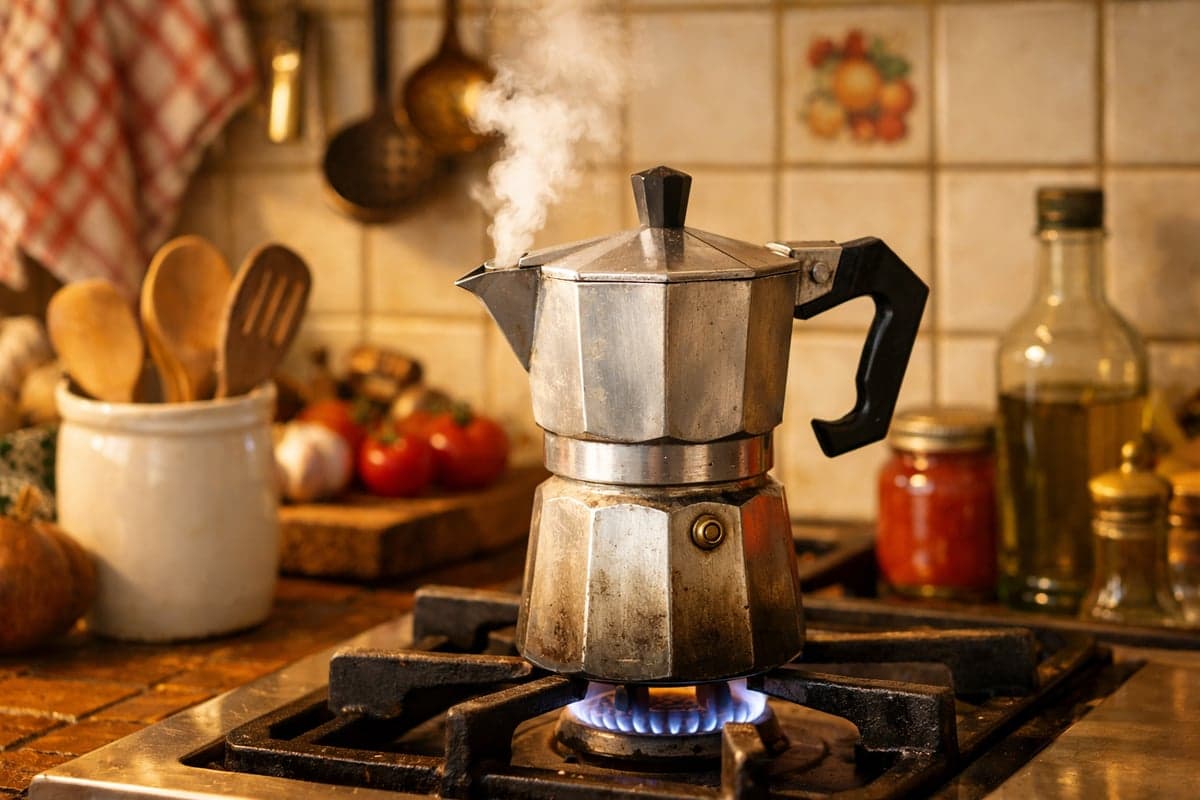
The Moka Pot (also called a stovetop espresso maker) uses steam pressure to force water through coffee grounds. While it creates a concentrated, strong coffee, it doesn't meet the technical definition of espresso.
How Moka Pots Work
A Moka Pot consists of three chambers:
- Bottom Chamber: Holds water
- Middle Chamber: Contains a funnel with coffee grounds
- Top Chamber: Collects the brewed coffee
The Process:
- Water in the bottom chamber is heated on a stovetop
- As water boils, steam pressure builds
- Pressure forces hot water up through the coffee grounds
- Brewed coffee collects in the top chamber
Characteristics of Moka Pot Coffee
Flavor Profile:
- Strong, concentrated, and bold
- Similar intensity to espresso but different flavor profile
- Can be slightly bitter if not brewed correctly
- Works well with milk-based drinks
- Best with medium to dark roast coffee
Visual Appearance:
- Dark, concentrated coffee
- No crema (the golden foam of espresso)
- Similar color to espresso but different texture
Brewing Parameters:
- Pressure: ~1.5 bars (much lower than espresso)
- Temperature: ~100°C (boiling point)
- Brew time: 2-5 minutes total
- Coffee-to-water ratio: ~1:4 to 1:6
Pros of Moka Pots
- Affordability: $30-$50 for a quality Moka Pot
- Durability: Made from aluminum or stainless steel, lasts decades
- Simplicity: No electricity needed, just a stovetop
- Compact: Fits easily in a drawer
- Portable: Great for travel or camping
- Low Maintenance: Easy to clean, no complex parts
Cons of Moka Pots
- Not True Espresso: Lacks the pressure and crema of real espresso
- Limited Control: Can't adjust pressure, temperature, or extraction time precisely
- Stovetop Required: Needs a heat source
- Brewing Time: Takes several minutes, not instant like espresso
- Learning Curve: Requires practice to avoid bitter, over-extracted coffee
- No Crema: Missing the signature golden foam of espresso
Espresso Machines: True Espresso at Home
Espresso machines use an electric pump to create the high pressure necessary for true espresso extraction. They range from simple entry-level machines to sophisticated prosumer models.
How Espresso Machines Work
The Process:
- Water is heated to precise temperature (90-96°C)
- An electric pump creates 9 bars of pressure
- Pressurized water is forced through finely-ground coffee
- Extraction happens in 20-30 seconds
- Result: A shot of espresso with crema
Types of Espresso Machines
Entry-Level ($500-$800):
- Semi-automatic machines
- Basic temperature control
- Manual steam wand
- Good for learning espresso basics
Mid-Range ($800-$1500):
- PID temperature control
- Better steam wands
- More consistent results
- Suitable for daily use
High-End ($1500+):
- Dual boilers
- Advanced temperature control
- Professional-grade steam wands
- Commercial-quality results
Characteristics of Espresso
Flavor Profile:
- Intensely concentrated
- Complex, layered flavors
- Sweet, balanced, and full-bodied
- Distinctive crema adds texture and flavor
- Best with medium to dark roast coffee
Visual Appearance:
- Dark, syrupy liquid
- Golden-brown crema on top (1-2mm thick)
- Thick, viscous texture
- Distinctive "tiger striping" in the crema
Brewing Parameters:
- Pressure: 9 bars (130 PSI)
- Temperature: 90-96°C (194-205°F)
- Brew time: 20-30 seconds
- Coffee-to-water ratio: 1:2
Pros of Espresso Machines
- True Espresso: Creates authentic espresso with crema
- Precise Control: Adjustable pressure, temperature, and extraction time
- Versatility: Can make espresso, cappuccinos, lattes, and more
- Speed: Pulls a shot in 20-30 seconds
- Consistency: Reproducible results once dialed in
- Milk Steaming: Built-in steam wands for milk-based drinks
Cons of Espresso Machines
- High Cost: Entry-level machines start at $500+
- Space Requirements: Takes up significant counter space
- Complexity: Requires learning curve and practice
- Maintenance: Needs regular cleaning and descaling
- Grinder Requirement: Needs a quality espresso-capable grinder ($200+)
- Electricity: Requires power outlet
The Pressure Gap: Why It Matters
The fundamental difference between these two methods is pressure:
Espresso Machine:
- 9 bars of pressure (130 PSI)
- This high pressure:
- Creates crema by emulsifying oils
- Extracts specific compounds quickly
- Produces the signature espresso flavor
- Allows for precise extraction control
Moka Pot:
- ~1.5 bars of pressure (22 PSI)
- This lower pressure:
- Cannot create crema
- Extracts differently, producing a different flavor profile
- Takes longer to extract
- Less precise control
The pressure difference is why Moka Pot coffee, while strong and concentrated, doesn't taste like true espresso. The extraction process is fundamentally different.
Cost and Complexity Comparison
Moka Pot
Initial Investment:
- Moka Pot: $30-$50
- Stovetop: Already have one
- Grinder: Can use pre-ground (though not ideal)
- Total: $30-$50
Ongoing Costs:
- Coffee beans: Same as any method
- Maintenance: Occasional cleaning, gasket replacement every few years
- Total: Minimal
Complexity:
- Simple to use once you learn the technique
- No electricity or complex parts
- Easy to clean
- Portable and versatile
Espresso Machine
Initial Investment:
- Entry-level machine: $500-$800
- Espresso-capable grinder: $200-$400
- Accessories (tamper, scale, etc.): $50-$100
- Total: $750-$1300
Ongoing Costs:
- Coffee beans: Same as any method
- Maintenance: Regular cleaning, descaling, gasket replacement
- Repairs: Potential for expensive repairs
- Total: Moderate to high
Complexity:
- Steep learning curve
- Requires practice to master
- Regular maintenance needed
- More things that can go wrong
The Verdict
Choose a Moka Pot If:
- You want strong, concentrated coffee on a budget
- You're making milk-based drinks and don't need true espresso
- You want simplicity and portability
- You're okay with coffee that's "espresso-like" but not true espresso
- You have limited counter space
Choose an Espresso Machine If:
- You want authentic espresso with crema
- You're serious about espresso and milk-based drinks
- You have the budget ($750+ for machine and grinder)
- You're willing to invest time in learning and practice
- You want precise control over extraction
The Reality: A Moka Pot makes excellent coffee that works great in milk-based drinks. While it's not true espresso, many people find it perfectly satisfying for their needs. An espresso machine is necessary only if you specifically want authentic espresso with crema.
Milk-based drinks: If you're making lattes or cappuccinos with your Moka Pot or espresso machine, check out our top-rated milk frothers guide to create cafe-quality foam at home. And once you have your espresso machine, our step-by-step guide to dialing in espresso will help you pull perfect shots.
Who This Is For
This guide is perfect for:
- Coffee lovers on a budget who want to make lattes and cappuccinos at home
- Anyone curious about the difference between Moka Pot and espresso
- People deciding between these two methods
- Home baristas looking to understand extraction science
If you decide to go with an espresso machine, our guide to the best espresso machines for beginners will help you choose the right one. And don't forget—you'll need a quality grinder! Check out our top burr grinders under $200 for recommendations.
Want more comparisons? Explore all our product comparisons to help you choose the right equipment.
FAQs
Can a Moka Pot make true espresso?
No, a Moka Pot cannot make true espresso. It lacks the 9 bars of pressure required for authentic espresso. However, it makes excellent concentrated coffee that works well in milk-based drinks.
Is Moka Pot coffee as strong as espresso?
Moka Pot coffee is strong and concentrated, but it has a different flavor profile than espresso. It's more similar to a very strong filter coffee than true espresso.
Do I need a special grinder for Moka Pot?
While you can use pre-ground coffee, a quality burr grinder will significantly improve your results. You'll want a medium-fine grind, similar to table salt.
Can I make lattes with Moka Pot coffee?
Yes! Moka Pot coffee works excellently in milk-based drinks. You'll need a separate milk frother (check out our top-rated milk frothers guide) to create the foam.
How much does a good espresso setup cost?
A quality entry-level setup (machine + grinder) will cost $750-$1300. This includes an espresso machine ($500-$800) and an espresso-capable grinder ($200-$400).
Is it worth buying an espresso machine?
It depends on your priorities. If you specifically want true espresso with crema and have the budget, yes. If you just want strong coffee for milk drinks, a Moka Pot might be sufficient.
How long do Moka Pots last?
Quality Moka Pots can last 20+ years with proper care. The gasket may need replacement every 5-10 years, but the pot itself is extremely durable.
Can I use espresso beans in a Moka Pot?
Yes, but "espresso roast" beans are just dark roasts. You can use any coffee beans in a Moka Pot. Medium to dark roasts typically work best.
Best next step
Compare picks and prices before you decide
If you are weighing a purchase after this guide, these shortlist and head-to-head pages are the fastest next read.
Related Articles
Paper vs. Metal Filters: How They Affect Coffee Flavor
The filter you choose has a massive impact on the clarity and body of your coffee. Which one should you be using?
Read Paper vs. Metal Filters: How They Affect Coffee Flavor →French Press vs. AeroPress: Which One Is Right for You?
Two of the most popular immersion brewers go head-to-head. We compare flavor, ease of use, and cleanup.
Read French Press vs. AeroPress: Which One Is Right for You? →Burr vs. Blade Grinders: Why It Matters
Is a burr grinder really worth the extra money? We compare the two most common types of coffee grinders to see which one wins.
Read Burr vs. Blade Grinders: Why It Matters →